Social media impacts more than just users and businesses. It can impact business-to-business (B2B) marketing. The study Social media analytics for business-to-business marketing, focuses on how social media analytics (SMA) can be used, not only as a promotional tool, but also as a source of data for businesses. The following table further outlines this:

The article focused on the study stated, “it is important to learn how the knowledge created using SMA would be stored and utilized in an organization so that a firm can build on the knowledge asset to create a competitive advantage. The focus thus is on the insights derived from SMA rather than a focus on the technical aspects.” (Agnihotri, 2023)
In layman’s terms, if we collect and analyze SMA, it will allow businesses to analyze marketing strategies with social media, rather than promotional or communication strategies.
In a larger business, SMA would be difficult to collect and identify its impact. Luckily, for those of us focused on smaller businesses, this data will not be difficult to gather and analyze. Analyzing what practices work for your small business and storing that data will allow for pruning of practices that were tried and failed, are no longer valid, or no longer work in the current day and age. With that information, you can then build on business-to-business relationships, which as we can see from the “Social media users’ impacts on business” article on this site, is quite beneficial as you grow your business.
As your business grows, social media users may take a closer look at the higher purpose of your brand. Depending on your business, this discussion could be a main focus of your social media or on the backburner. The following table from the How corporate brands communicate their higher purpose on social media: Evidence from top global brands on Twitter article, reflects how important brand purpose is depending on your industry.
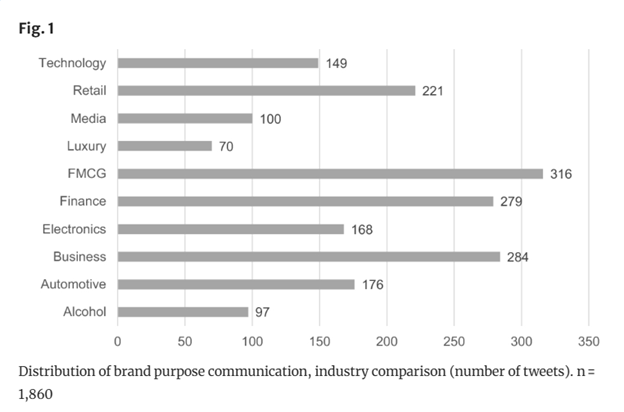
If your business falls into one of the industries above with high numbers, it may be beneficial to start deciding what your brand purpose will be. That said, some examples of brand purpose are displayed in the following table from the same article.
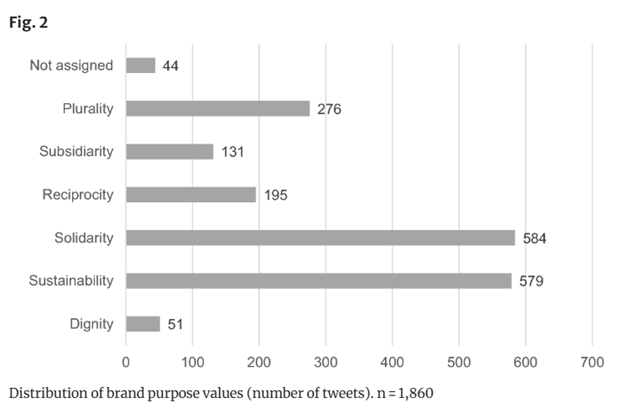
The study showed that “…the value of solidarity dominates across all sectors, especially in the FMCG and financial services sectors. Corporate brands in this sector communicated primarily about their own philanthropic efforts (e.g., sponsorship, donations, fundraising, etc.) and their adoption of social engagement.” (Rudeloff, 2024) With this data, we can infer that solidarity would be a safe bet for your business brand.
Is discussing these philanthropic efforts on social media enough to communicate brand purpose? The article states that, “…it can be assumed that corporate brands must be perceived as authentic and credible in order to generate positive engagement…Since brand purpose communication deals with sensitive issues related to human values, this can potentially have a great impact on brands’ reputation.” (Rudeloff, 2024) So we must ensure that our communication of these efforts is both authentic and credible. Perhaps creating a scholarship for the town in which your business is located would be a great example of this. This reflects authenticity through supporting future generations, and a simple link to the scholarship page will reflect credibility. After the scholarship is awarded, photos with the student will also offer credibility.
 Social Media and Business